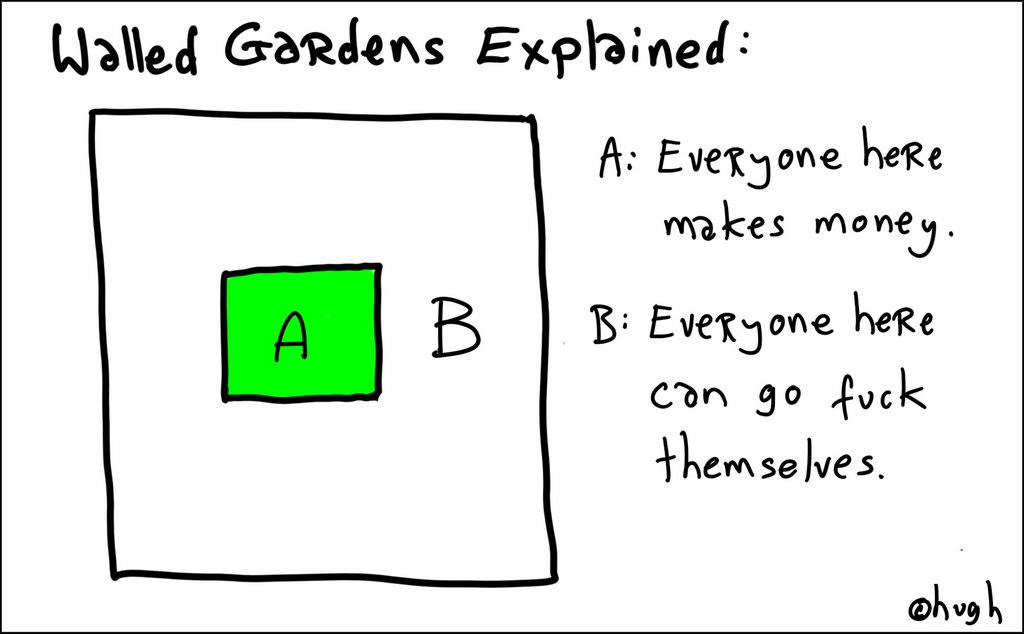
Wednesday, December 13, 2006

Speaking of cluetards...

Have you notice the drums roll and trumpeting around the latest Sametime interoperability announcement? I always find it entertaining to witness how incumbents can turn a failure to respond to their customers wishes into a world saving progress without even a blush!

At the end of the summer of 2004, I had the opportunity to see IBM in action at a workshop held by the Financial Service Instant Messaging Association on the subject of IM interoperability. FIMA had been worried very early on by the disparity of instant messaging protocols, both in the public and the enterprise IM space. So they set to give their least common denominator functional definition of interoperability, which when you think of it is not asking for the moon…
At the workshop, vendor presented their views, and it all went smoothly until the chair of the Jabber Software Foundation asked IBM why they wanted to support the still unfinished SIMPLE protocol as a federation protocol rather than XMPP which was already stable and widely used alongside Sametime in the financial industry.
Anyone either business savvy or a little familiar with Sametime's technical architecture would have though along the same lines. From an architecture standpoint, the multiplexers, community hubs and community server applications of sametime, with their permanent TCP links, can be functionally mapped one to one with XMPP client connectors, session managers and service components. From a business perspective, federating the existing large financial industry's Sametime islands with the expanding XMPP footprint would have help IBM keep an edge against the nascent Microsoft LCS expansion.
Instead, we were granted a flame from the IBM representative in favor of SIMPLE which was more typical of a Gorilla's behavior than a business representative:

If challenged by a younger or even by an outsider male, a silverback [Silverbacks are the strong, dominant troop leaders] will scream, beat his chest, break branches, bare his teeth, then charge forward.

In short, SIMPLE was the way to go, and everyone not endorsing it was stupid and doomed to fail. Well, two years after, IBM announced interoperability with XMPP, which instantaneously guaranties secure and controlled communication with any XMPP server, including those at Google. They also announced interoperability with AOL, but funnily enough they do not specify what protocol they use. You maybe interested to know that AOL offers both an LCS flavor of SIMPLE and XMPP to enterprises for federation with AIM. As there is no mention of interoperability with LCS in the Sametime announcement, it would be interesting to have a clearer insight on what they IBM is using for interconnecting with AOL. As to Yahoo!, well it is always a little difficult to have anything but a fuzzy statement from these guys. Anyway, the announcement said federation between Sametime and Yahoo messenger is on the "road map".

Ken Camp came up with a nice and illustrative contraction to apply to people unable to spot the appropriate answer to end-users' aspirations, cluetards… In this case, IBM is only different from the average by the size, just a large cluetard. If I were a financial Sametime customer, I would claim compensation for having been treated this way and left longing for so many years.
More importantly, this episode illustrates once again how large incumbent IT vendors are blind to real users' needs, when they are not in line with their core business. IBM business is in selling servers, not in providing communication between peoples. I find it amazing that a pure technical choice made by some ex-Ubique geek ended up depriving an important business community of an easy and beneficial way to conduct their business with small firms or other institutions.

Beyond this, Giacomo is in my opinion asking the right question: should we forget SIMPLE? In a perfect world, I would certainly answer positively. In the real world, it will take some time in view of the interests at stake. Having been involved in designing applications federating both protocols, I certainly have a unique perspective on the strength and weaknesses of each of them. From a technical standpoint, my only observation is that SIMPLE simply lacks the simplicity needed for a wide adoption.

  • Except the Microsoft LCS there is no SIMPLE based instant messaging and presence (IMP) application in service outside the telecom industry. Anybody having looked closely at the actual protocol used by LCS will agree that it's actual compliance with SIMPLE stops short after the first SERVICE packet. Microsoft has leaned the hard way that SIMPLE was not ready for IMP, and has been obliged to supplement the lack of the protocol with LCS own extensions. Such things as multi client instances, message sessions, contact lists management, preferences, multi user conferencing are notably absent from the specification and have partially been implemented by Microsoft using non-standard extensions.
  • From a user agent perspective, the closest to a "standard" SIMPLE client implementation is the Counterpath' eyebeam softphone and it XLite derivative. Their development team deserves the greatest respect for having incessantly been trying to accommodate the ever changing scope of XCAP, and the various contact lists management options that must be part of a "workable" SIMPLE solution. But while doing this, they had no time to automate the status change to "on the phone" when a SIP call was taking place…
  • From a standard stand point, those who have red the 2500 plus pages from the 3GPP describing the use of SIMPLE for presence are well aware that, for example, list services, XCAP and a stable definition of rich PIDF are on the critical path for delivering the service as expected by the IMS architecture. XCAP is probably the most blatant example of wheel re-invention in this industry, where the oversized ego of the author is holding back an entire industry. More importantly, if one look at the SIMPLE RFCs and drafts authors, one can quickly infer that the standardization process is done by a vendor led consortium. As I have said before, almost every vendor led consortium has failed to impose any long lived interoperability standard on the Internet. I am afraid SIMPLE is another one of them, and it is time to realize it…
  • Finally, there is the complexity of SIMPLE. It makes it difficult to grasp by the average application developer outside those versed in "voice over…". When adding together the rather rigid framework provided by SIMPLE and the vast differences in interpretations by various implementers, it makes this protocol look "elitist" when compared to XMPP. As I mentioned above, having designed and implemented converged systems supporting those two protocols simultaneously, I can vouch that any application programmer can grasp how XMPP works; the same is not true from SIMPLE.

As Ken put it, simplicity and elegance alway make winners and losers. Simplicity is unfortunately not the first quality of SIMPLE. As a result, it has not seen mainstream adoption by web application developers which are instead turning to XMPP. That said, SIMPLE will not go away easily in view of the heavy investments made by many cluetards. Unfortunately this state of affairs will help maintain the silo divide between the telecom and the internet worlds.

The term "elegance" finds its origin in the Latin "eligere" which also gave the derived term "election". In fashion as in real life, elegance implies making a choice. In the Sametime case, it was between remaining Incredibly Blind and Mediocre, or working at solving real end-users pain points. You can guess what choice was made…

Technorati Tags: , , , ,

Labels: ,

Thursday, November 30, 2006

The six oldest new ideas in chat…

Since I came across this post, I was looking for the proper illustration before coming back to it. In the end, the simplest and first impression is always the right one: this author does not have the slightest clue of what he is talking about…

First of all, he starts by being confused by the subtle difference between "chat" and "instant messaging". In effect, most of the "exemplifying" services or product he mentions are doing with instant messaging, and some of them offers multi user chat facilities. But instant messaging is not really news.

Interoperability. Ever since the invention of the telephone, interoperability has been the single requirement for any mediated communication system. In short we cannot decently consider this to be a new idea. Because of the early calcification forming into the innovative region of most corporate executives' brain, we unfortunately face a walled garden landscape for instant messaging (amongst other things). So suddenly discovering that "clearly, open standards are here to stay" is not properly visionary. Well as they say in China, "when the wise man point to the moon, the fool only sees the finger".
As a passing remark, unless I am mistaking, Trillian, Gaim, Adium and Miranda are multi protocol instant messaging client applications, not "services".

In-Browser Chat. This one is misleading because of the confusion between chat and instant messaging. But a simple search on the term chat will bring back 551,000,000 results which tends to indicate that chat has been in the news for quite some time. And when you carefully look at the results, you will find that many point to in-browser chat for so called "adults" services. But isn't this the oldest business in the world?
There are a number of browser based instant messaging clients which are trying to solve the interoperability issues mentioned above. For the same reasons that lead to the ineluctable disappearance of communication silos, only those services that rely on open protocols will remain. At that point in time, the end user will have the choice of installing a standard based client application on its workstation or use the same application hosted at a provider. The debate between hosted and non-hosted application has been part of the IT landscape ever since its beginning. This is not new either.

Location Based Chat. Geo location services have existed in mobile phone services since the early days of GSM. Before the web 1.0 bubble, some vendors were even touting geo location as "killer application". And it is still part of several mobile application services trying to bring contextual search to road warriors.
As I explained earlier, geo location can participate in bringing a sensation of "place" into mediated communication. But initial research on the subject dates back to the mid nineties. It is fair to say that most of the research was concerned about "virtual reality" worlds at the time. Obviously, instant messaging was not yet considered mainstream. This simply re-enforce the length of the road leading from ideas to their applications in different domains, but this has always been the case.

Flexible Identities. A quick look at this post will convince you that multiple personae have one of the longest research histories in the context of the Internet. You will also notice that there is a subtle distinction between "multiple personae" and "multiple facets" of one's identity. The same as between Doctor Jekyll and Mister Hide…
As a remark, the provided examples only implement precepts from the now defunct Presence and Availability Management forum on how granular presence was to be used to manage communication address handles, and when thinking of it, all the call forwarding features available in a PBX were already a way to "separate your private and professional faces". After ten years of "converged communication" talks, applying the same principles to instant messaging should not come as a real surprise.

Contextual Chat. In this case we are really talking about chat. This section presents a blurred mix of two different concepts. On one end there is the chat room client who can be embedded on different web pages, such as blog posts, and provide a fixed context for discussion. On the other end we have the "virtual presence" clients as browser's add-in which will work on any web page. The idea of being instantly aware of other users reading the same web page emerged early in the history of the Web. Implementation projects appeared in the fist half of the nineties with the advent of Virtual Places and other co-browsing initiatives. Ten to fifteen years on the Internet time scale are more like a century to me.

Rich Media Chat. As the author puts it "web cams and microphones have been on the web for a while", and it is only the commoditization of broadband network access and computing power that made "rich media", read internet audio and video, accessible to the mass. Already in the early days of video-conferencing, when only ISDN and leased lines were available, several systems were offering in-band instant messaging and even document sharing. Once again the idea dates back fifteen years. As for the previous section, speaking of novelty is not appropriate. That said, the trend to combine audio to instant messaging is natural as it mimic a real world behavior. The challenge will be to provide a seamless experience moving from one medium to the other across different devices.

The Internet has an immense magnifying power. It even allows us to quickly search a vast knowledge repository for information that would be relevant to make a post valuable. But using a flashy title is still far easier than providing relevant content: you only need to utter six words instead of a few hundred. Unfortunately the lazy approach based on making noise has been around since the beginning of time.

Technorati Tags: , , , ,

Labels: ,

Sunday, November 26, 2006

Visibility, Awareness, and Accountability

I have already presented the concept of "social translucence" while discussing the benefit of adding "place" based information to presence for a better regulation of mediated communications. A "socially translucent" system enhances two important dimensions of communications. First, by making social information visible it enables participants to be aware of what is happening, and to be held accountable for their actions as a consequence of public knowledge of that awareness. Second, the fact that the real world is translucent to social information, and that people have a sophisticated understanding of the consequences of the visibility of their social interactions helps structuring interactions in a mediated communication.

While the "social translucence" perspective is unique, it is not the only concept to be concerned with making the activities of communication systems' users visible to others. Since ten years, a considerable research work has been targeted at video-mediated communication (Finn et al., 1997), and has led to the concept of "awareness". A number of researchers have constructed systems attempting in various ways to provide cues about the presence and activity of their users (Benford et al., 1994). These researches have highlighted three design approaches to representing social cues in a digital system: the realist, the mimetic, and the abstract.

  • The realist approach tries to project social information from the physical domain into or through the digital domain. This work is exemplified in teleconferencing systems and media space research.
  • The mimetic approach tries to reproduce social cues from the real world as literally as possible in the digital domain. The mimetic approach is exemplified by graphical games and virtual reality systems. It uses virtual environments and avatars to mimic the real world.
  • The abstract approach involves portraying social information in ways that are not closely tied to their physical analogs. It could uses abstract sonic cues to indicate social activity, or abstract visual representations. This approach also includes the use of text or simple graphics to convey social information.

Large deployment and adoption of systems based on the realist or mimetic approaches have faced substantial pragmatic hurdles, such as their cost, the required infrastructure, and the constraints of users support. On the other hand, I believe that the abstract approach has not received sufficient attention, particularly with respect to graphical representations. Text and simple graphics have many powerful characteristics: they are easy to produce and manipulate; they persist over time, leaving interpretable traces; and they enable the use of technologies such as search and visualization engines. In this last category we find "social proxies" such as those depicted here.

A social proxy is an abstract dynamic graphical representation that portrays socially salient information about the presence and activities of a group of people participating in an online interaction. It is one technique for providing online, multi-user systems with some of the cues so prevalent in the face to face world. Social proxies are intended to be visible to all those portrayed in them, thus providing a common ground from which users can draw inferences about other individuals, or the about the group as a whole.

Typically, a social proxy shows participants in a particular "place", as well as some of their activities in that "place". The choice of which aspects of activity are visible, and which remain private, depend on the particular context. Social proxies have four basic characteristics:

  • A social proxy typically consists of two components: a large geometric shape with an inside and an outside that represent the online "place", and much smaller shapes positioned relative to the larger shape that represent participants.
  • The presence and activities of participants in an online "place" are represented by the location and movement of the smaller shapes relative to the larger one. The relationships and movements of the visual elements have a metaphoric correspondence to the position and movement of peoples in a similar face-to-face situation.
  • Social proxies are public representations, and everyone looking at a social proxy for a given "place" sees the same thing. It is not possible for participants to customize their views of a social proxy. This is important because I know that if I see something in the social proxy all other participants can see it as well. This is what supports mutual awareness and accountability.
  • Social proxies are represented from a third-person perspective. Looking at a social proxy, every participant sees itself represented in it in the same way other participants are represented. This enables learning. A participant can see how its actions are reflected in its personal representation, and thus begin to make inferences about the activities of others.

The shared nature of a “social proxy” is critical. The knowledge that activity depicted in the social proxy is visible to all participants makes it “public”, and transforms it into a resource for the paticipants. It is this visibility that supports people accountability for their actions, and underlies the social phenomena, such as feelings of obligation, peer pressure, and imitation, that enable coherence in groups interactions.

On the Internet we are socially blind, and our attempts to communicate are often awkward. Even when others are clearly present, as in a chat room or on a conference call, it is difficult to see who is present, who is paying attention, or who wishes to speak. Things that require little effort in real world "places", such as taking turns when speaking; noticing when someone has a question; seeing who is responding to whom, require a lot of effort in online "places", when they at all are possible. I think introducing "social proxies" in widely used presence enabled applications, such as IM or VoIP clients, would allow us to progress on the way of a better sensitivity to the actions and interactions of those around us in virtual "places".

Technorati Tags: , , , ,

Labels: , , ,

Presence and going places

Mike Gotta has jotted down a series of notes about his trend of thoughts regarding presence technologies. In my opinion, his segmenting of the subject strongly reflects the constraints of an analyst work, but he nevertheless brings up many interesting points. I like in particular the way he widens up the scope of the reflection beyond current implementations

... food for thought and for consideration as to how some of these items relate to assumptions currently made around presence systems. How many assumptions based on instant messaging, IP telephony and so on will get in the way of a more expansive view of presence?

From his points, I would like to focus on presence relations to "location", "environment", "activity" and "role", what is often refered to as parts of a context. In that respect, because of their strong relationship to the physical reality, the use of spatial metaphors and spatial organization to model context have been favored by many mediated communication and collaboration systems. I believe this approach does not properly capture the complexity of real human social interactions. In real life, we are located in "space", but we act in "places". If the structure of a world is spatial, by comparison a “place” is a space invested with social meaning, such as behavioral appropriateness or cultural expectations. Furthermore "places" are valued "spaces". The distinction is like between house and home: a house is where we shelter, but a home is where we live. In order to get contextualy closer to the complexity of social communications, integrating “place” based information would greatly improve presence technologies.

Presence technologies make applications augments physical reality rather than replaces physical reality. Current implementations fall short in adapting to the vast variety of social communications contexts any human being is experiencing in real life. For example, the nature of relations and interactions with one's friends and family differs significantly from the nature of relations and interactions in the workplace. Even these simple differences are only superficially addressed by today's presence enabled applications. As a matter of illustration, we can cite:

  • The way of establishing trusted presence relations scales poorly. To establish individual full trust between 10 persons, 10×9/2=45 bilateral agreements need to be established. Trust groups would scale much better and be easier to manage.
  • The availability status does not provide much added value. Many community systems provide a list of who is on to the community website, using a group-based trust model where presence information not only indicates "who is online" but also "who is here". This model may work well when using a community’s website as primary shared resource. However, many groups and communities in workplaces often use a variety of shared resources. In such cases, for example when co-workers are always online at the same time, more detailed presence information than just online/offline status is needed.
  • The trust model is very crude. Either one establishes a trust relation and can always observe other's presence information, or one does not establish a trust relation, in which case one can never other's presence information and cannot engage in conversations. This might not be problematic when dealing with friends and family, with whom you expect to resolve unwanted interruptions easily. It becomes a problem when dealing with a larger set of co-workers in a multi-project environment.

Presence technologies need to be augmented to provide information not only about people but also about “places”. Unlike what is currently offered in IM and VoIP applications, more advanced presence mechanisms must allow exchange of information only with a certain subset of people, not always but sometimes only, depending on real-time context information that can be derived from the virtual or real “places” people visit. Today, ordinary presence systems only give answers about person oriented questions:

  • Who is online, or is this person online?
  • What is this person doing?

Advanced presence systems will have to provide answers and notifications about “place” oriented questions, such as:

  • Who is here?
  • Who is near?
  • Where is that person?
  • What is that person doing there?

It happens these questions can be answered by combining different scoped attributes of presence infomation, including the trust relation between parties, their real or virtual locations, activities at these locations and presence and awareness scopes.

Trust scope. Some presence systems allow anyone who has access to a presence server to see presence information of others, other systems are more restrictive. The establishment of trust is distinguished by four model aspects:

  • Opt-in / opt-out / managed: In an opt-in trust model, others can only see presence information if you explicitly give them permission. In an opt-out model, others can see presence information, unless you explicitly denied them permission. In a managed model, a third party instead of the users determines who can see presence information.
  • Individual / group: In a individual trust model, each person rights to presence information are managed separately. In a group trust model, rights to see presence information are managed for an entire group.
  • Reciprocal / non-reciprocal: In a reciprocal trust model, if A has the rights to presence information of B, then B also have the rights to the presence information of A. In a non-reciprocal trust model, this may not be the case.
  • Permanent / blockable / contextual: In a permanent trust model, presence information is available as long as the rights to do so exist. In a blockable trust model, presence information can temporarily be denied. If the rights to presence information are based on location or place the trust model is contextual.

Location scope and virtual distance. When users browse the web, edit files from a shared storage, or read or post in blogs, they are present at a "location" in cyberspace. That said, many characteristics of physical space, such as being aware of someone's presence, and being able to initiate contact and communicate with that person, do not necessarily exists in the cyberspace.
Location information is expressed by coordinates, but in cyberspace unlike in the real world, users can be at multiple coordinates simultaneously. Place-based presence systems need to answer the question "Who is near?", have to calculate virtual distance between these coordinates. Virtual distance is then used to determine who can and who cannot be seen. To calculate virtual distance, presence location coordinates need to be laid out in a space, such as topology, virtual world or any directed graph. In place-based presence systems, location information constitutes a primary form of presence information. Not only the fact that someone is online somewhere in cyberspace, but also which resource that person is accessing provides presence information that can be made available to trusted parties.

Presence scope. A presence scope specifies the maximum virtual distance at which a trusted party can watch presence information. One may use multiple presence scopes, e.g., "people on the same website can see me, but cannot see the page I am on" and "people on the same web page can see if I am focusing on that page".

Awareness Scope. An awareness scope specifies the maximum virtual distance at which a user wants to get notified of presence information of trusting parties. One may use multiple awareness scopes, e.g., "are there people with me on the same web page?" and "are people with me on the same web page focusing on the page?".

Activity scope. What a user is doing at a location is also presence information. For example, in addition to browsing a web page, this may involve whether the user is actually focusing on this page or not , whether the user is editing this page or not.

Ultimately, by relaying “place” based information, presence technologies will enable three important building blocks of social interaction-- visibility, awareness, and accountability-and thus become "socially translucent" systems. We can illustrate a "socially translucent" system by the following example. Consider a door with a design problem, which is likely to slam into anyone about to enter from the other direction when opened quickly. An attempt to fix this problem would be to place a "Please open slowly" sign on the door. As one might guess, the sign is not a particularly effective solution. But we could also put a glass window in the door. As people approach the door they see whether anyone is on the other side and, if so, they modulate their actions appropriately. The sign is no longer required. While this solution works, it is useful to examine the reasons for the effectiveness of the glass window:

  • Firstly, the glass window makes visible socially significant information. As humans, we notice and react to movement and human faces and figures more quickly than we notice and interpret a printed sign.
  • Secondly, the glass window supports awareness. One does not open the door quickly because one knows that someone is on the other side. Our social rules come into play to govern our actions, as we have been raised not to slam doors into other people.
  • Lastly, there is another subtler reason. Even if one does not care about hurting others, one will nevertheless open the door slowly because one knows that the other knows that one knows it is there, and therefore one will be held accountable for its actions. While awareness and accountability usually occur together in the physical world, they do not necessarily in a virtual context. It is through such individual feelings of accountability that norms, rules, and customs become effective social control mechanisms.

Note that "social translucence" is not only about acting according to social rules, but more about facilitating different types of communication and collaboration. Using presence information it is today possible to observe that another party is likely to be available for communication. In return for giving up some privacy, the other party expects to be contacted at suitable moments, can screen incoming messages, can plausibly deny being present by not responding or responding later, or simply by initiating the conversation at a time of its choosing. With "socially translucent" presence technologies it becomes easier for users to have coherent discussions, to observe and imitate others' actions, to engage in peer pressure, to create, notice, and conform to social conventions.

Technorati Tags: , , , ,

Labels: , , ,

Wednesday, November 08, 2006

Morphing conversation UI

I am not a typical "example" when it comes to user interface, and I have my own idiosyncratic preferences, especially for communication applications. In particular, I despise the way we have been forced by the incumbent desktop software players to use mail clients to manage information. Their influence is so insidious, that even their strongest open-source contenders stick to the same screen real estate concept.

I came across this short post by Mike Gotta elaborating on the ineluctable death of the email client as we know it.

Concerning enterprise environments, at some point a few years down the road, shifting demographics as Danah Boyd points out in this post, will have an interesting impact on the future of e-mail clients. Once "digital natives" become a large part of the workforce, it's likely that we'll see a tipping point where users will prefer real-time communication front-ends to async front-ends. Yes, e-mail clients will support unified messaging and will morph to provide a real-time communication (RTC) user experience but younger workers may prefer to live in more natively-designed RTC clients (such as Microsoft Office Communicator and IBM Sametime), especially as those clients support both social and work-related capabilities.

I am a bit disappointed because my relief is not readily in sight, but this analysis is pre-announcing what I believe to be the irreversible evolution of our way to interact with desktop communicating applications. There was a not so distant time where the latest hipe was about getting IP to every workstation. The natural evolution would be to get conversations to the workstations, any type of conversation, and have all the associated communication stacks available as local servers to any application whishing to use them. At that point, it will become obvious that email is just an asynchronous channel for real time text exchange in a wide presence enabled communication system, instead of instant messaging being a real time version of email, as the current generation of "office" software would like us to believe. And I hope this difference will bring UIs more to my taste.

Technorati Tags: , , , ,

Labels: , ,

Tuesday, October 17, 2006

Walled gardens redux

In a parallel post I described the landscape in which I consider that walled gardens, such as those still implemented by the incumbent consumer IM, are a flawed strategy.

In short, for any community based service, switching costs remain a critical success factor for building market share and defending against competition. However, as people themselves are increasingly becoming the sources of content and the owners of distribution, we are increasingly seeing an inversion of control, where service providers benefit from customers provided competitive advantages. For a service provider, basing a strategy on directly increasing switching costs by using walled garden becomes antagonist with the users' aspirations. Instead, as the control shifts towards community, a new environment appears where people themselves willingly create their own high switching costs.

When translating to real time communication technologies, it become evident that open protocols offering transparent and unbiquitous communications is the only acceptable way. As a consequence, only widely accepted and implemented open standards will remain. The same shift will apply to communication as it did to content generation and distribution. The end user themselves will want to create their own communication services, and will not accept anything but self imposed constraints. As a result of this new dynamic, they will only choose the easiest to implement and widest ranging protocols. In the end, the most successful services will be those who manage to hide the inherent complexity of any multimedia communication system, while providing unlimited interoperability.

Technorati Tags: , ,

Labels: ,

Sunday, October 15, 2006

Barrier to exit

A noteworthy "collateral" effect of the Internet is its ability to turn entrenched business positions upside down. As a consequence, thinking strategic approaches to business in a contrarian fashion and experimenting with all sorts of bizarre combinations of services has become the norm for entrepreneurs wanting to grab a piece of the web 2.0 pie. In hope that out of the "mashups" chaos, a few viable models will eventually emerge.

Amongst these experiments, the most in favor are those dealing with "social" [insert your own hype word here] services, where the intended audience is some sort of "community" of interests. The underlying concept is to capture the natural tendency of human beings to gather and talk. Some people will choose to go to "Ye Olde Cheshire Cheese" and do this with a glass of ale; other will login to MySpace… Ultimately though, the most lively and sticky places are those where people communicate whatever the subject, even without subject.

It is important to keep in mind that communications alone does not necessarily act as the primary draw for gathering. Back in the days of consumer online services, email was not effective at acquiring new users. Mainly because most people had no idea what email was and how useful it could be. New users where acquired by showing unique benefits, such as unique content. Yet once they discovered the benefits of email, the mail box became the common ubiquitous reason to join the community. As a result, it is critical to understand that what attracts people initially is often not what keeps people on your network interested in the long run. After all is said, people still hang out in their favorite pub or [insert your own favorite place here] to have conversations.

At the same time, a community generates its own content, and uses its own style in expressing widely its interests. When transferred to the Internet, in a context where people themselves are increasingly becoming the sources of content and the owners of distribution, it becomes clear that any strategy based on increasing switching costs becomes antagonist with the users' aspirations. In effect, we are increasingly seeing an inversion of control, where service providers benefit from customers provided competitive advantages. Switching costs remain a critical success factor for building market share and defending against competition. However, who creates and controls it is fundamentally different from previous services.

Walled gardens are the antithesis of this new dynamic. As the control shifts towards community, a new environment appears where, instead of a service provider locking its customers into a walled garden, people themselves willingly create their own high switching costs. For instance, for an auction service, the switching cost is not the relationship with the service itself, but the reputation and trust a user has spent time building with other community members. For bloggers, the switching cost is not the time spent constructing the blog, but rather the social network of "friends" accumulated over time.

Ultimately, and it may sound like a paradox, the most successful services will offer entire freedom to their user to churn while giving them unlimited communication capabilities. The most successful communities will be those having understood that self imposed constraints at switching are the only ones willingly accepted by members.

Technorati Tags: , ,

Labels:

Sunday, July 16, 2006

From inmates to IM mates…

To put a closing section to the latest on IM misconception, I believe this piece to be particularly misleading for casual readers. After the information mashup here comes the statistics mashup. The recipe is simple. Just throw everything IM related in the cauldron, hum some incantation, and the definite truth immediately surface: “Google Talk fails to find an audience!” To be frank, I have no idea how many are using their IM service, as Google is rather secretive. I am not a Google aficionado, but something in the way the post come to this conclusion makes me feel uneasy. In the statistics:

  • Legacy consumers IM providers users are cited as services
  • Google Talk is cited as an application, and so is Trillian

In such conditions, I would have thought a more appropriate interpretation of the data to be “only 3.4 millions elected to use Google Talk client for IM”. Obviously less catchy than “fails to find an audience”…

Whatever method was used to come up with these figures in the first place, the derived conclusion is a bias on reality. The customers of all the legacy IM services, with their bright colored uniformed IM clients, are easily accounted for. In comparison, people communicating with the Google Talk service are more difficult to quantify. Nonetheless, the number of registered users for the Google talk service cannot be greater than the GMail service’s registered users. But the fact that Google’s IM services is younger than the incumbents service is not factored in. Etc… In the end, an eye catching title will certainly be simpler to create than a critical analysis of these figures.

Most importantly, this blunt statement fails to capture the fundamental difference between a captive and an open IM service. Either you listen to, communicate with, be a resource for, build trust with your users, and once you have established trust, you can build a long and healthy relationship. Or you keep your users behind bars, hopping they will not look outside, until they decide to escape. Google seems to favor the former approach. In this context, following my previous post, AOL’s biggest challenge to respond to the latest tactical move from its competitors involves deciding a drastic departure from its traditional IM model. This tougher than marying a next of kin, as interoperability would imply AIM and Google Talk becoming IM mates, creating a real opening. I doubt Google would welcome a closed partnership with any player, including AOL.

Technorati Tags: , , , ,

Labels:

Saturday, July 15, 2006

IM interoperability: it’s not an IM issue

Stove had it at hand, but it did not push his advantage to finish his move: interoperability is not about IM, it is about multimedia communication.

…interoperability is not about IM it's about multimedia communication

Only in this context would a regulator (eventually) be required to step in, and force the interests at stake to “play nice”… As soon as one mentions media communication, the only business model that springs to mind is the POTS model. The toll model, with its greedy gatekeepers, has been around for millenniums. It is well known, does not require any advanced technology or an abnormally high IQ, is only based on power. In theory, it should only appeal to the most primitive societies, but there are hard facts proving the opposite…

In effect, there is no business model for IM. For what it is worth, Wikipedia describes instant messaging as a form of real-time text communication. What money is there to be made in text messaging? Same as what can be made in email. Instant messaging as a form of communication has already become a commodity. And if it had been alone, it would be using a single protocol since many years. The curse of IM lies in the bundling by the crowd of IM with presence, which is tomorrow’s real “dial-tone”. Moreover, this misconception is bi-directional. Whenever someone says “presence”, you immediately hear another person replying “IM”. And vice versa.

What is really at stake in these clouds forming is the control over presence, and by extension, over its use as dial tone to enable more efficient multimedia communications.

First of all, there is VoIP. There has been a business model for VoIP alone, related to decreasing cost. Together, VoIP and presence are much more attractive, as presence would enhance the efficiency of placing a voice call. Remember that in the current POTS, you have to actually ring the other party to find out about its availability. Establishing a voice call between two parties creates a significant load on the underlying infrastructure, even if using a separate signaling network somewhat decreases this load. This is mainly what carriers are charging you for. In a presence enabled multimedia communication system, you do not need to call the other party, as you can deduce its availability to accept your communication request from an aggregation of presence state. This approach drastically decreases the load on your infrastructure, and in theory, makes it more efficient. The carrier’s business in turn benefits from this increased operational efficiency.

Second of all, there is presence enabled marketing. Although this is still a fuzzy business model, there has been growing interest in linking focused advertising with presence to achieve really personalized content distribution. The inclusion of presence in communication devices, from mobile phones to set-top boxes, not forgetting all the connected personal computers, will allow aggregating a wide array of real-time information about one’s behavior. This alone creates huge business opportunities, when coupled with multimedia communication. By chance, the average marketer have not yet grasped the potential... This also induces a number of privacy related concerns, for which there are no satisfactory answers yet. The idea of presence enabled marketing has been in the boardrooms of the most visionary multimedia communication companies for over five years now. AOL, Microsoft and Yahoo! are not what I would call visionaries… but they have done their home work and watched their competitors. Beyond the potential, they have come to realize they could be left on the side of the road if they were to remain at stand still.

As this other post rightly describes, interoperability is not a technology issue, it is not even an IM issue. It is a wider scoped tectonic movement, where the business goes beyond the real-time exchange of text messages. I am certain the major “IM” service providers have already figured out how they will get something in return to interoperate: they will simply charge their customers for filling up their “series of tubes” with voice messages… As I said they are far from being visionaries.

Technorati Tags: , , , , , ,

Labels:

Thursday, July 13, 2006

An IM game of Go

So this week has seen the birth of a limited interoperability beta test between Microsoft and Yahoo! IM bastions. The real thing to strike me in the announcement is how un-respectful it is of their respective users’ base.

The press release itself is written entirely in marketing-speak, and is rather arrogant when referring to their users. Not only do they call them “consumers”, but they try to make them, and us at the same time, believe it was so difficult to achieve interoperability. That sounds like a typical telco’s speech, don’t you think? And by many aspects it is. After all Yahoo! always believed they had built “a transport network” and that they could become a carrier. Microsoft is, well … Microsoft and has always believed it was everything. Maybe calling their users “consumers” make them feel more like real “carriers”

For those a little familiar with the public IM context, this announcement is not about empowering their federated users’ base, but clearly aimed at isolating even more their arch rival AOL. Not directly, as one would immediately believe, by excluding it from their “interoperability”, but rather by undermining potential revenue sources. AOL is deriving revenues from charging for the access to their community of users. In certain industry verticals, such as finance or insurance, AIM is widely used, and AOL as been careful to preserve this population. It is taking advantage of it to extract revenues through “certifying” access to its private IM community. This announcement is an additional nail in their isolationism’s coffin. This is clearly what I read behind Microsoft and Yahoo! declaring that their users

…will be among the first to exchange instant messages across the free services as well as see their friends’ online presence, view personal status messages, share select emoticons, view offline messages and add new contacts from either service at no cost.

Frankly speaking, how would AOL pay toll remain sustainable in the future? Not much! You can trust all the financial institutions’ IT teams to leverage this announcement to their own advantage.

This interoperability move also provides Microsoft with a clear tactical advantage on the enterprise IM server market. They will clearly benefit from this new context and will certainly be pushing their LCS further into the enterprise. Microsoft can provide LCS connectivity to MSN, and through the interoperability agreement, will reach Yahoo! users. They already have “certified” LCS connectivity to AOL. LCS will end being the only certified multi IM networks connectivity for the enterprise. The cleverness touch resides in all this being done without infringing any right. Much unlike the use of XMPP transports in enterprise, if you see what I mean.

…there are no technical barriers to open IM interoprability between AOL and Google…

By announcing their intent long before they actually delivered, the legacy pair has again used one of the well known techniques of market control byincumbents described by Robert X. Cringely. I believe AOL is bound to move soon to counter the Microsoft Yahoo! interoperability deal. With the small investment from Google in AOL, it makes an interoperability announcement between these two other players a plausible scenario. There are no technical barriers to an open interoperability between AOL and Google, as AOL has already deployed XMPP gateways for the enterprises. On paper, it may allow a rapid reaction by AOL, but they are also known to be such slow negotiators…

You may have noticed how this annoucement is about a “proprietary” interoperability. As a matter of fact, nothing is ever said about how they technocally bridge the two legacy networks. I have seen a suggestion that the next step should be the publication of an open interoperability specification by Microsoft and Yahoo! I wonder if the author is so naïve, or was under the influence of one of his blogging “ingredients”, as to expect an “open” specification coming from these two dinosaurs. Moreover, this is not needed, as the open specification for IM interoperability already exists in the form of XMPP. Email interoperability was never achieved through “industry players”, and almost every vendor led consortium has failed to impose any long lived interoperability standard on the Internet. Is the real issue people’s short memories, their propention to re-invent the wheel, their limited conception of the Internet time-space or (name your own reason here) ...

In spite of their desire to make us believe that something truly revolutionary had been achieved, Microsoft and Yahoo! have only managed to set the foundation for a larger IM island. A 350 millions inhabitants’ continent perhaps, but an island still. Previous similar attempts, such as those by Compuserve or Genie, to deny free communication over the Internet, have failed.

Even more so in a time of user’s empowerment, in the absence of an honest voice, you’re bound to remember John Lydon’s famous words: “Ever get the feeling you’ve been cheated?” Once a fraction of these 350 millions would have realized the vacuity of the announcement and noticed the contempt with which they have been treated, it might become a heavy incentive to force Microsoft and Yahoo! to become really interoperable…

Technorati Tags: , , ,

Labels:

IMteroperable? isn't it amazing, dear?

What is really the best in Microsoft and Yahoo! interoperability announcement is the part, were the customers of the two services:

will be among the first to exchange instant messages across the free services as well as see their friends’ online presence, view personal status messages, share select emoticons, view offline messages and add new contacts from either service at no cost.

So, paying interoperability was amongst the options? Such an unashamed attitude is simply amazing.

I leave you to read the rest of this marketing verbiage and discover how 350 millions where left out of a vast commodity service offered to the XMPP federation for over five years now. You will be surprised to discover that Microsoft and Yahoo!

are proud to deliver this latest advancement in IM services that empower people to communicate with virtually whomever they want, wherever they want and whenever they want.

and that the latest advancement they are referring to is simply that

Consumers worldwide from Microsoft and Yahoo! will be able to take advantage of IM interoperability and join the limited public beta program. They will be among the first to exchange instant messages across the free services as well as see their friends’ online presence, view personal status.

Beyond the fact it looks like an April’s fool day’s press release, I am just wondering how, in our days of user’s empowerment, 350 millions still bear that kind of arrogance from such dinosaurs. But you never know, Microsoft and Yahoo! may well push it further and claim a patent on IM interoperability by tomorrow...

Anyway, this is again a reminder of a sad reality. We find today a bunch of IM services attempting to emulate the grotesque attitude of wireless carriers. Walled gardens are not only alienating, they are essentially hostile to the customer. Customers, beyond an enormous frustration feeling, should have a greater say in the matter. It will be interesting to watch how they will assert their rights, because, from the tone of this announcement,  the IM providers are in a rather arrogant mood.

In the end, what worries me more is the flabergasted attitude expressed by this kind of post. But when someone describes Trillian or Adium as services, no wonder it also writes “IM interoperability took so long that I thought it was never going to happen”. But today everything has changed. Isn’t this really an amazing world?

Technorati Tags: , , ,

Labels: